


Dispatch No. 2: Introduction to Fire Investigation

Application of the Scientific Method: NFPA 921
At the heart of every fire investigation is the scientific method, as outlined in NFPA 921: Guide for Fire and Explosion Investigations. This document is the gold standard in the field, providing a systematic approach to determining how and why a fire occurred.

The process begins with recognizing the need for an investigation, followed by defining the problem: what caused the fire? Investigators then collect data, which includes everything from witness statements to physical evidence. Next, they analyze the data, develop hypotheses, and test those hypotheses against the evidence. Finally, they arrive at a conclusion that can be supported and defended.
This method ensures that investigations are not based on gut feelings or assumptions, but on facts and repeatable logic. It’s what separates professional fire investigators from armchair theorists.
Determining Area and Point of Origin
The first objective in any fire investigation is to determine the area and point of origin, which is the specific location where the fire began. This may be a corner of a living room, an engine compartment, or a wiring enclosure within an appliance. Establishing the origin is essential because it narrows the potential ignition sources and guides the entire cause analysis.
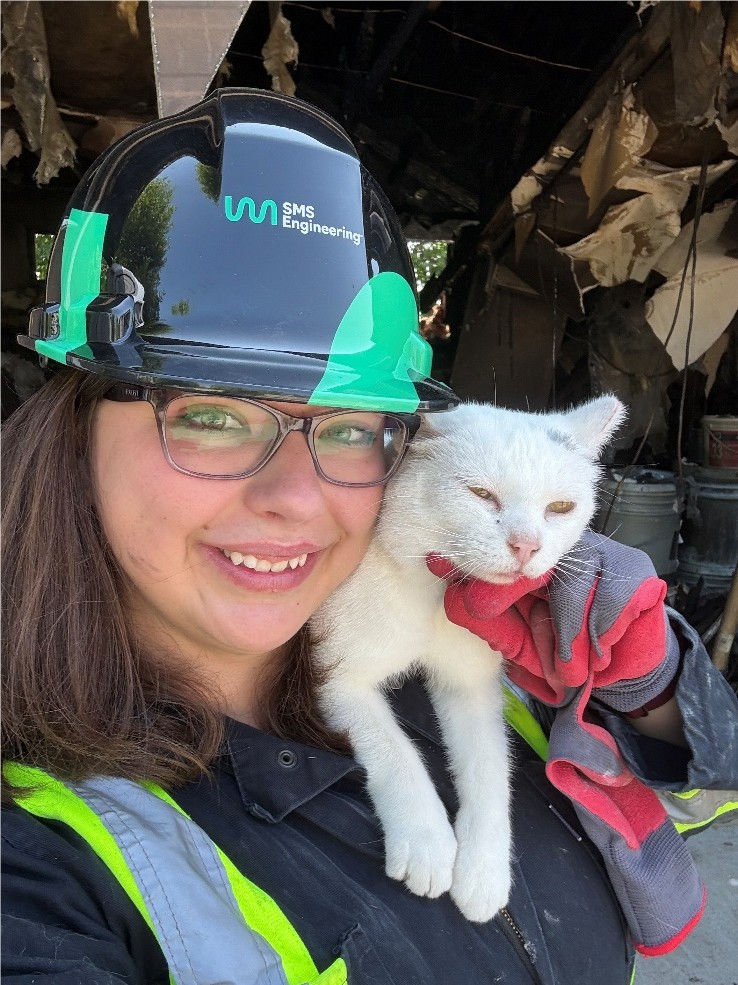
Investigators typically conduct the scene examination from the exterior toward the interior and from areas of least to greatest fire damage. This structured approach supports accurate interpretation and reduces the risk of relying on heavily damaged, ventilation‑influenced, or post‑flashover areas too early in the process. Fire patterns, fuel loading, burn directionality, and compartment fire dynamics are analyzed using the scientific method to identify the most probable ignition location. Witness observations and pre‑fire conditions, when available, are incorporated into the assessment.
In some residential or agricultural losses, investigators encounter pets or livestock near the
suspected area of origin. These animals are often referred to as four‑legged witnesses. They may gather in familiar spaces, near preferred escape routes, or where they last sensed unusual heat, smoke, or activity. While their behavior cannot be used as evidence, it can occasionally help direct attention to specific regions of the scene. Any such observations must be supported and verified by physical fire patterns and objective forensic indicators.

Cause Determination
Once the origin is established, investigators move on to determining the cause. This involves identifying the ignition source, the material first ignited, and the conditions that permitted ignition and sustained early fire growth.
Common Fire Cause Categories
Although electrical failures are a primary investigative specialty, all ignition mechanisms must be considered. Common cause categories include:
Electrical Failures – Conductor faults, resistive connections, overloading, insulation failure, appliance malfunction.
Heating Equipment – Furnaces, space heaters, fireplaces, chimneys.
Cooking‑Related Ignition – Unattended cooking, grease ignition, appliance malfunction.
Smoking Materials – Cigarettes, lighters, matches.
Open Flames – Candles, fireplaces, torches.
Chemical / Reaction‑Based Ignition – Spontaneous heating, oxidizers, reactive storage issues.
Intentional (Incendiary) – Deliberately introduced ignition sources or accelerants.
Natural Causes – Lightning or environmental ignition mechanisms.
Investigators employ a systematic elimination process to rule out non‑contributors and isolate the scenario that best aligns with validated evidence.

SMS Forensic Engineering
SMS Forensic Engineering provides an engineering-first approach to fire investigation, emphasizing defensibility, technical accuracy, and clear communication.
Our focus includes:
Fire Science & Engineering Expertise – Analysis grounded in material behavior, electrical engineering, and thermal dynamics.
Clear, Defensible Reporting – Findings structured to withstand legal, technical, and peer scrutiny.
Objective, Evidence‑Driven Evaluation – Ensuring conclusions are supported by measurable observations and scientific principles.
Our mission is to deliver clarity, technical rigour, and confidence through every investigation.

Summary: From Origin to Cause
Effective fire investigation is driven by a structured, scientific process supported by NFPA 921. Determining the fire’s origin and cause requires a disciplined approach that integrates fire dynamics, physical evidence, electrical analysis, and comprehensive hypothesis testing. Although the principles are well established, applying them in real‑world environments, each with unique fire patterns, ventilation conditions, and post‑fire alterations, remains a complex and highly technical undertaking.
Next Dispatch: The Role of Electrical Fires
One of the most common and complex fire causes you'll encounter? Electricity. In our next article, we’ll explore how investigators identify electrical fire causes, from overloaded circuits to arc mapping and faulty appliances.
Join us as we examine how electrical systems fail, how those failures produce recognizable forensic indicators, and how investigators distinguish true electrical causes from misleading post‑fire artifacts.

Comments