


Dispatch No. 1: From Fear to Forensics


I never liked fire.
As a child, I sat as far from the campfire as possible. The whoosh of ignition, the unpredictable dance of flames, it all felt wild and dangerous. My fear wasn’t just about getting burned; it was about not understanding fire at all.
Years later, I found myself pursuing a degree in electrical engineering, drawn to the logic and order of circuits where electrons follow rules and systems behave predictably. Fire, by contrast, seemed like chaos.
That changed during a university lab test. A flawless circuit failed. No smoke, no sparks, just silence. I double-checked every variable. Still, it didn’t add up. That moment lit a spark in me. I wasn’t afraid of the failure; I was intrigued by it.
Curiosity led me deeper into understanding how and why systems fail, particularly under thermal stress. After graduation, I stumbled across a job posting: Forensic Engineer and Fire Investigator. It combined two things I loved, engineering precision and solving real-world mysteries.
Despite my old fear of fire, I applied. Fires were still chaotic, but now they were puzzles waiting to be solved. I wanted to understand how failures, especially electrical ones, could lead to ignition, and I haven’t looked back.
Since then, I have conducted over 600 fire investigations and evidence examinations,
ranging from structure, equipment and vehicle fires to failures with appliances, devices and complex electrical systems.

Why Fire Investigation Matters
Every fire tells a story. Whether it’s a resistive connection at a power bar in a suburban bedroom or a raging inferno in a warehouse, there’s always a cause. Finding that cause isn’t just about assigning blame, it’s about learning, improving, and preventing future tragedies.
Fire investigation is the science of uncovering the origin and cause of a fire. It’s a meticulous process that blends chemistry, physics, engineering, and human behavior. Investigators are part detective, part scientist, and part storyteller. They sift through ashes and debris, analyze fire patterns, and reconstruct timelines.
Their work helps insurance companies process claims, law enforcement pursue justice, lawyers settle legal proceedings, and manufacturers improve product safety. Most importantly, thorough investigations provide insights that shape fire safety regulations, raise public awareness, and make homes and workplaces safer.

SMS Forensic Engineering
My investigative approach follows the same structured process SMS Forensic Engineering is known for, grounded in engineering principles.
From initial scene analysis to coordinated examinations and final reporting, every step is guided by evidence and methodology. When a loss occurs, whether it’s a fire, explosion, or system failure, we don’t speculate. We test. We analyze. We validate.
From Fear to Purpose
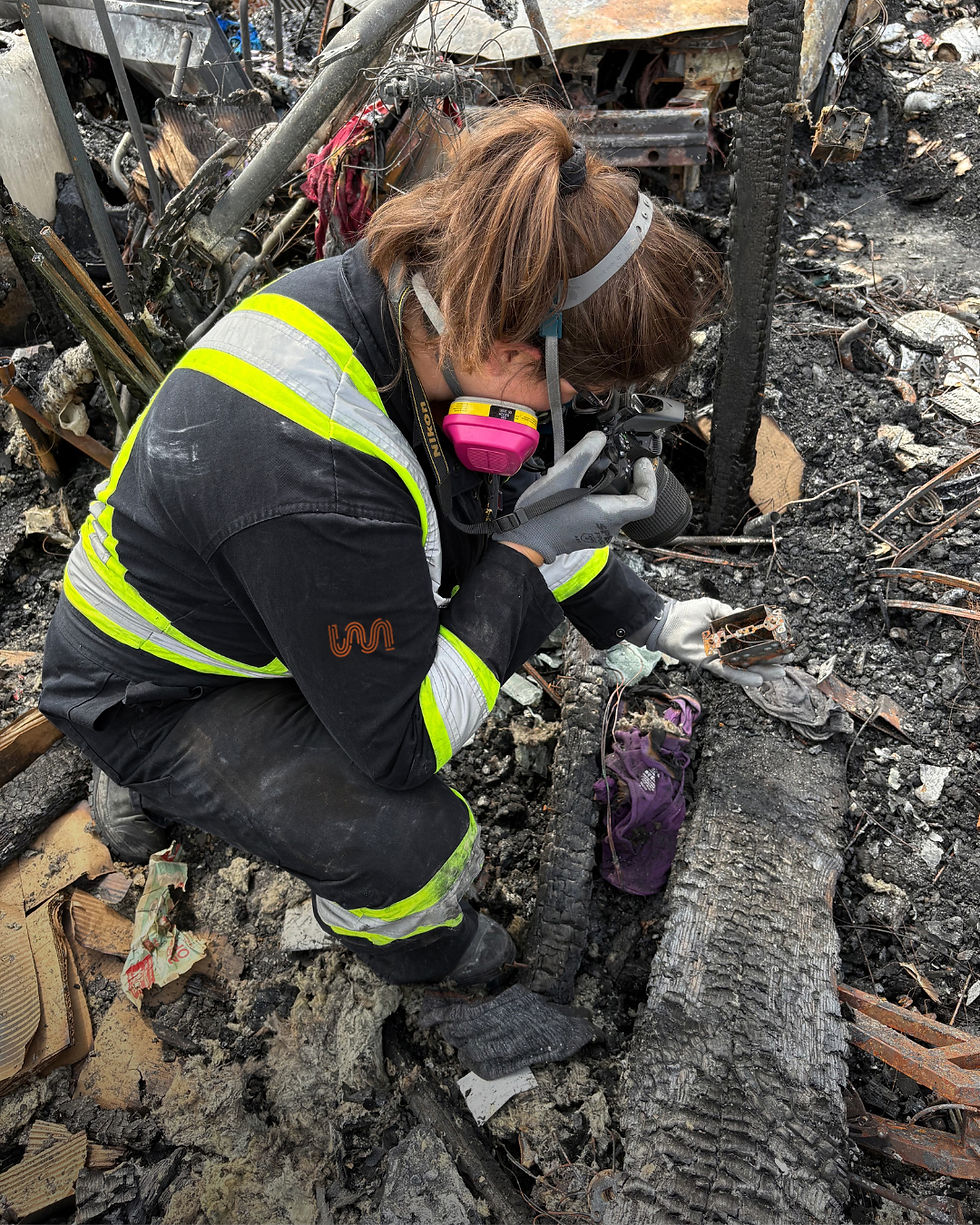
I still respect fire, but I no longer fear it. I face it head-on, with science and purpose. My fear has transformed into purpose. I know that every investigation I complete, every cause I uncover, and every report I write contributes to a safer world.
The Forensic Dispatch is a window into the world of forensic engineering and fire investigation. Whether you’re a student, engineer, firefighter, insurance professional, investigator, lawyer, or just curious, I’ll be sharing real case studies, tools of the trade, and insights into what really happens after the smoke clears.
In future Dispatches, we’ll dive deeper into real cases, explore investigative tools, and break down complex concepts into digestible insights. Whether you’re here to start a career in fire investigation or just want to understand what happens after the smoke clears, you’re in the right place.
Have questions about fire investigations or want us to cover a specific scenario? Drop a comment or connect with us, we’re always here to deliver clear, defensible answers.
To learn more about SMS Forensic Engineering and their engineering-first approach to forensic truth and post-disaster solutions, click here.


Comments